
Asset turnover ratios vary throughout different sectors, so only the ratios of companies that are in the same sector should be compared. The ratio is typically calculated on an annual basis, though any time period can be selected. These may include investment in new equipment or technologies, streamlining processes to reduce waste or downtime, or optimizing scheduling to maximize production output. The fixed asset turnover ratio provides valuable insight into the efficiency of your company’s use of fixed assets. By monitoring changes in this ratio over time, you can identify trends that may signal a need to adjust your investment in fixed assets or improve your operational efficiency. For example, a declining ratio may indicate a need to upgrade or replace outdated equipment or improve your production processes.
- The asset turnover ratio can also be analyzed by tracking the ratio for a single company over time.
- A low turn over, on the other hand, indicates that the company isn’t using its assets to their fullest extent.
- Below we describe the fixed Fixed Asset Turnover definition, explain how you can calculate it, and finally, how to use it to grow your business.
- Start by determining the total revenue generated by your company over the last year.
How can a company improve its Fixed Asset Turnover ratio?
Its total assets were $1 billion at the beginning of the year and $2 billion at the end. The asset turnover ratio is expressed as a rational number that may be a whole number or may include a decimal. By dividing the number of days in the year by the asset turnover ratio, an investor can determine how many days it takes for the company to convert all of its assets into revenue. Thus, if the company’s PPL are fully depreciated, their ratio will be equal to their sales for the period.
Why Use a Fixed Asset Turnover Ratio Calculator?
Depreciation is a non-cash expense that reduces the value of fixed assets over time. If a company has a high level of depreciation, it can artificially inflate the fixed asset turnover ratio. Fixed Asset Turnover (FAT) is a financial ratio that measures a company’s ability to generate net sales from its investment in fixed assets. This ratio provides reconciliation insight into how efficiently a company is utilizing its fixed assets to produce revenue. FAT measures a company’s ability to generate net sales from its fixed-asset investments, namely property, plant, and equipment (PP&E). A higher fixed asset turnover ratio indicates that a company has effectively used investments in fixed assets to generate sales.
Fixed Asset Turnover Ratio Calculator
Asset turnover ratios vary across different industry sectors, so only the ratios of companies that are in the same sector should be compared. For example, retail or service sector companies have relatively small asset bases combined with high sales volume. Meanwhile, firms in sectors like utilities or manufacturing tend to have large asset bases, which translates to lower asset turnover. Another mistake that companies make is to compare their fixed asset turnover ratio to industry benchmarks without considering the unique characteristics of their own business. Each company has its own set of circumstances, such as the age and condition of its fixed assets, that can impact the ratio. Therefore, it is important to analyze the ratio in the context of your own company’s history and goals.
Influencing Factors on Asset Calculation
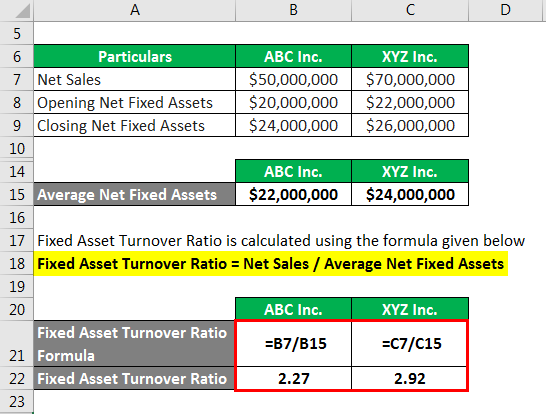
This can improve your company’s creditworthiness and increase your access to financing options. Therefore, regularly monitoring and improving your fixed asset turnover ratio can have a significant impact on the financial health and growth potential of your business. The fixed asset turnover ratio is useful in determining whether a company uses its fixed assets to drive net sales efficiently. It is calculated by dividing net sales by the average balance of fixed assets of a period. Depreciation is the allocation of the cost of a fixed asset, which is expensed each year throughout the asset’s useful life.
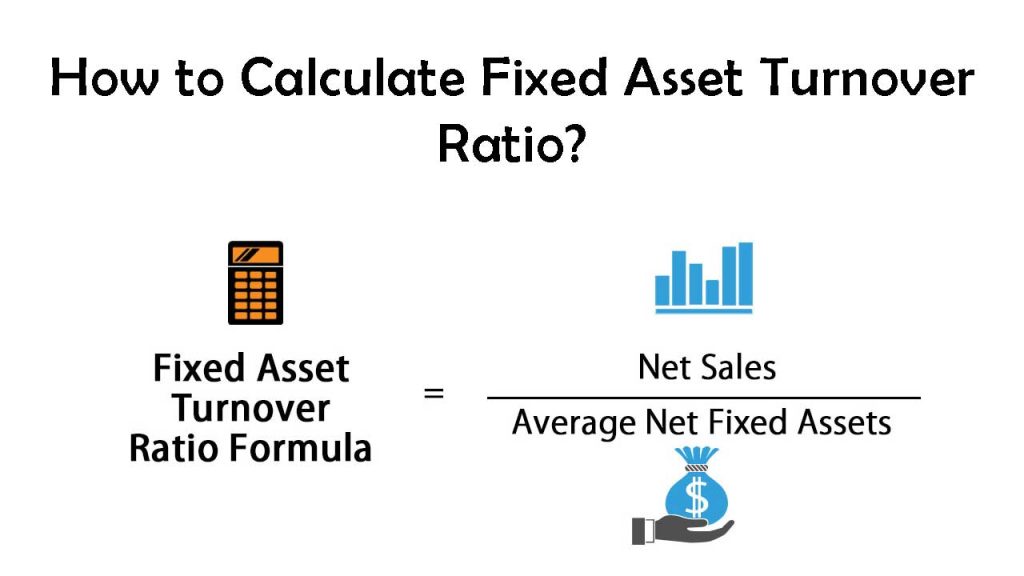
The Fixed Asset Turnover Ratio Formula
Companies with seasonal or cyclical sales patterns may show worse ratios during slow periods. Therefore, it’s crucial to examine the ratio over multiple time periods to get an accurate picture of performance across different market conditions. To calculate the ratio in Year 1, we’ll divide Year 1 sales ($300m) by the average between the Year 0 and Year 1 total asset balances ($145m and $156m). We now have all the required inputs, so we’ll take the net sales for the current period and divide it by the average asset balance of the prior and current periods. As a quick example, the company’s A/R balance will grow from $20m in Year 0 to $30m by the end of Year 5.
Thus, a sustainable balance must be struck between being efficient while also spending enough to be at the forefront of any new industry shifts. On the flip side, a turnover ratio far exceeding the industry norm could be an indication that the company should be spending more and might be falling behind in terms of development. Companies should strive to maximize the benefits received from their assets on hand, which tends to coincide with the objective of minimizing any operating waste.
It is important to note that a high fixed asset turnover ratio may indicate that a company is efficiently using its fixed assets to generate revenue. However, a very high ratio may also suggest that the company is not investing enough in its fixed assets, which could lead to decreased productivity and revenue in the long run. On the other hand, a low fixed asset turnover ratio may indicate that a company is not using its fixed assets efficiently, which could lead to higher costs and decreased profitability. This ratio compares net sales displayed on the income statement to fixed assets on the balance sheet. A higher fixed asset turnover ratio generally means that the company’s management is using its PP&E more effectively. As fixed assets are usually a large portion of a company’s investments, this metric is useful to assess the ability of a company’s management.